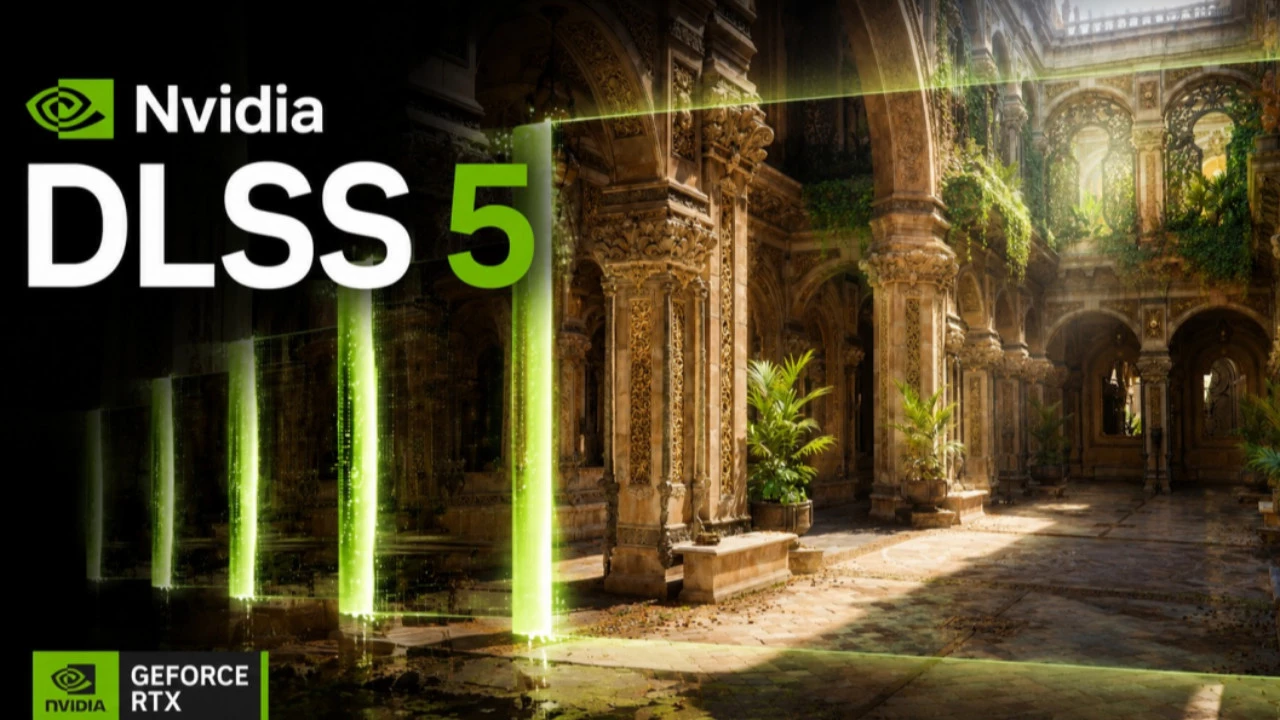
NVIDIA Corporation has officially unveiled the fifth generation of its revolutionary Deep Learning Super Sampling technology, marking another significant milestone in the evolution of AI-powered graphics rendering. The announcement confirms that DLSS 5 is scheduled for release in autumn 2026 and will be available exclusively for the company’s latest RTX 50XX series graphics cards, continuing NVIDIA’s strategy of leveraging cutting-edge hardware capabilities to deliver unprecedented visual quality and performance improvements.
The exclusive availability of DLSS 5 for RTX 50XX GPUs represents a strategic decision that aligns with NVIDIA’s historical approach of incentivizing upgrades to newer hardware generations. This move is expected to drive significant consumer interest in the latest graphics card lineup while simultaneously pushing the boundaries of what’s possible in real-time rendering technology.
The Evolution of DLSS Technology
Deep Learning Super Sampling has undergone remarkable transformation since its initial introduction in 2018 alongside the RTX 20-series graphics cards. The original DLSS 1.0 received mixed reviews due to image quality inconsistencies and limited game support. However, NVIDIA dramatically improved the technology with DLSS 2.0 in 2020, which introduced a more sophisticated AI model that delivered significantly better image quality while boosting frame rates by up to 100 percent in supported titles.
DLSS 3.0, launched alongside the RTX 40-series in 2022, introduced Frame Generation technology that created entirely new frames using AI, effectively multiplying performance beyond what traditional upscaling could achieve. DLSS 3.5 followed with Ray Reconstruction, which used AI to enhance ray-traced lighting and reflections. Each iteration has demonstrated NVIDIA’s commitment to advancing AI-driven graphics technology, and DLSS 5 promises to continue this trajectory with even more impressive capabilities.
What to Expect from DLSS 5
While NVIDIA has not disclosed all technical specifications of DLSS 5, industry analysts anticipate several groundbreaking features based on current development trends and patent filings. The new version is expected to leverage the enhanced Tensor Cores and improved neural processing capabilities of the RTX 50XX architecture, potentially offering even more efficient frame generation and superior image reconstruction algorithms.
Experts suggest that DLSS 5 may incorporate more advanced temporal stability improvements, reducing ghosting and artifacts that have occasionally affected previous versions. Additionally, the technology could feature better handling of fast-moving objects and complex particle effects, addressing some of the remaining challenges in AI-based upscaling. The exclusive nature of the release suggests that DLSS 5 will utilize hardware features specific to the RTX 50XX generation that cannot be replicated on older architectures.
Market Implications and Competition
The announcement comes at a time of intense competition in the graphics card market, with AMD’s FSR technology and Intel’s XeSS providing alternative upscaling solutions. Unlike NVIDIA’s proprietary approach, AMD’s FidelityFX Super Resolution works across a broader range of hardware, including older GPUs and even competitor products. Intel has similarly positioned XeSS as a more accessible technology.
However, NVIDIA maintains a significant advantage in AI-powered graphics technology, with DLSS consistently receiving praise for superior image quality compared to open alternatives. The RTX 50XX exclusive strategy for DLSS 5 reinforces NVIDIA’s market position while potentially creating additional pressure on consumers considering their next GPU purchase. Gaming industry observers note that exclusive features like DLSS 5 could significantly influence buying decisions when the RTX 50XX series becomes available.
Looking Ahead to Fall 2026
As the gaming industry continues its rapid advancement toward photorealistic graphics and immersive experiences, technologies like DLSS 5 play an increasingly crucial role in making cutting-edge visuals accessible without requiring exponentially more powerful hardware. The autumn 2026 release window suggests that NVIDIA is carefully timing the technology launch to coincide with major game releases and the holiday shopping season, maximizing both developer adoption and consumer interest in upgrading to RTX 50XX graphics cards.
Expert Opinion: The exclusive release of DLSS 5 for RTX 50XX cards signals NVIDIA’s confidence in their next-generation architecture’s capabilities and their commitment to maintaining technological leadership in AI-accelerated graphics. This strategic move will likely accelerate the upgrade cycle among enthusiast gamers while putting additional competitive pressure on AMD and Intel to advance their own upscaling technologies. Industry observers should watch for game developer adoption rates as the key indicator of DLSS 5’s success in the marketplace.