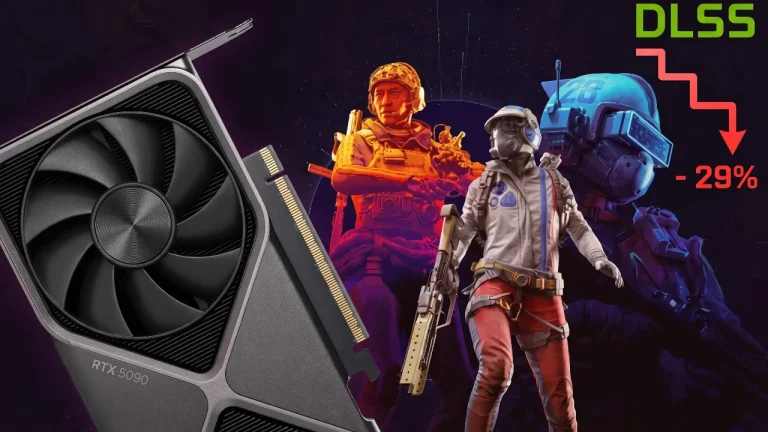

In a surprising turn of events that has sent ripples through the PC gaming community, an unreleased NVIDIA technology has been discovered hiding within an early access game client. The NBA 2K27 early access build was found to contain a previously unknown library file called nvngx_dlssnr.dll, weighing in at a substantial 158 megabytes. This file, identified as version DLSSNR 310.8.0.0, represents the runtime component of NVIDIA’s highly anticipated DLSS 5 Neural Rendering technology, a next-generation graphics enhancement system that was not scheduled for public release.
The discovery has quickly captured the attention of modders and enthusiasts alike, with reports emerging that the leaked neural filter has already been successfully ported to other games, including Remedy Entertainment’s critically acclaimed action-adventure title Control. This unauthorized implementation demonstrates both the modularity of NVIDIA’s DLSS architecture and the gaming community’s insatiable appetite for cutting-edge graphics technology, even in its unfinished state.
Understanding DLSS Technology and Its Evolution
Deep Learning Super Sampling, known as DLSS, represents one of the most significant advancements in real-time graphics rendering of the past decade. First introduced by NVIDIA in 2018 alongside their RTX 20-series graphics cards, DLSS uses artificial intelligence and machine learning to upscale lower-resolution images to higher resolutions while maintaining visual quality. This allows gamers to achieve higher frame rates without sacrificing the visual fidelity they expect from modern titles. The technology has undergone several major revisions, with DLSS 2.0 in 2020 marking a turning point that addressed many criticisms of the original implementation, offering dramatically improved image quality and broader game compatibility.
DLSS 3, released in 2022, introduced Frame Generation technology exclusively for RTX 40-series GPUs, which creates entirely new frames using AI rather than simply upscaling existing ones. This innovation effectively doubled or tripled frame rates in supported titles, though it required the latest hardware featuring the Ada Lovelace architecture. The progression to DLSS 4, announced earlier this year, brought Multi Frame Generation capable of generating up to three additional frames for every traditionally rendered frame. Now, with the accidental leak of DLSS 5 components, the gaming world is getting an unexpected preview of what NVIDIA has been developing behind closed doors.
The Neural Rendering Revolution
The leaked DLSS 5 Neural Rendering technology appears to represent a fundamental shift in how game graphics are processed and displayed. While previous DLSS versions focused primarily on intelligent upscaling and frame generation, neural rendering suggests a more comprehensive approach where AI models play a direct role in rendering visual elements. Industry analysts speculate that this could involve AI-driven texture enhancement, lighting calculations, and even geometry processing, potentially reducing the workload on traditional GPU shader cores while improving visual output.
The substantial file size of 158 megabytes for the runtime library indicates the presence of large neural network models embedded within the software. For comparison, earlier DLSS libraries typically measured in the tens of megabytes, suggesting that DLSS 5 incorporates significantly more complex AI models capable of more sophisticated image processing. This aligns with broader industry trends toward larger, more capable AI systems that can handle increasingly complex tasks with greater accuracy and fewer artifacts.
Implications and Industry Response
The premature leak of DLSS 5 through an unrelated sports game title raises serious questions about software security and the challenges of managing cutting-edge technology across multiple development partners. NVIDIA has not yet issued an official statement regarding the leak, though the company is expected to address the situation as news spreads through tech communities. Game developers and publishers working with pre-release NVIDIA technologies may face increased scrutiny regarding their handling of confidential software components.
For gamers and enthusiasts who have already begun experimenting with the leaked technology, early reports suggest mixed results. Some users describe impressive improvements in certain scenarios, while others report visual artifacts and stability issues, which is expected given that the software was clearly not intended for public use. Control, developed by Remedy Entertainment using their proprietary Northlight engine, has become an unofficial testing ground due to its demanding graphics requirements and existing DLSS support, making it an ideal candidate for comparing different versions of the technology. As the situation develops, the gaming community awaits both NVIDIA’s response and the eventual official announcement of DLSS 5, which this leak has inadvertently previewed months or potentially years ahead of schedule.
Expert Opinion: This leak suggests NVIDIA is pushing toward a paradigm where neural networks handle increasingly fundamental aspects of real-time rendering, potentially blurring the line between traditional GPU computation and AI inference. The 158MB library size indicates sophisticated models that could revolutionize how games balance performance and visual quality. However, the premature exposure may force NVIDIA to accelerate their announcement timeline while addressing any vulnerabilities in their partner distribution channels.