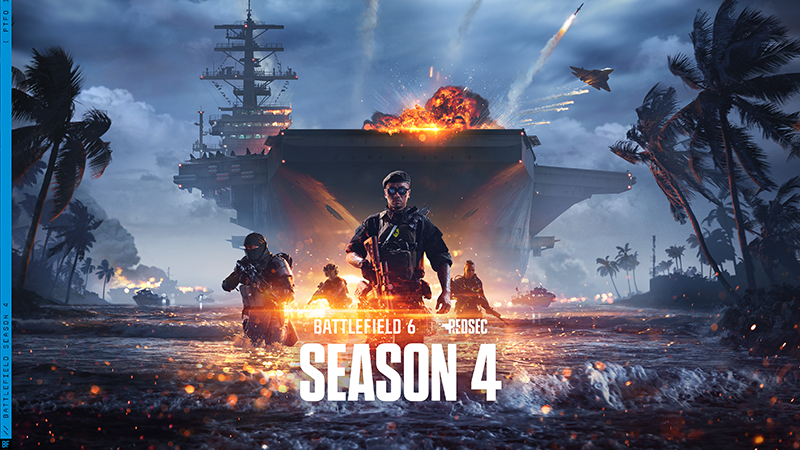
The tides of war are shifting once again as naval combat makes its triumphant return to the Battlefield franchise. Since its earliest iterations, the series has been celebrated for delivering massive-scale warfare that encompasses land, air, and sea operations. This rock-paper-scissors dynamic between different vehicle types has consistently produced some of the most memorable moments in multiplayer gaming history. With Season 4 of Battlefield 6, players will once again have the opportunity to command powerful watercraft across two carefully designed maps: the brand-new Tsuru Reef, available at launch, and the legendary Wake Island, a franchise icon that will arrive later in the season. For veterans and newcomers alike, mastering naval warfare will be essential to turning the tide of battle in your favor.
Fundamentals of Naval Navigation and Combat
Controlling a naval vessel in Battlefield 6 follows the same intuitive control scheme as land vehicles like tanks. On controllers, the left stick manages throttle, reverse, and turning, while keyboard and mouse players will use the familiar WASD configuration. However, experienced sailors understand that water-based combat requires a fundamentally different mindset than ground warfare. The key principle is maintaining constant movement rather than stopping and starting repeatedly. An idle boat becomes an easy target for enemy watercraft, aircraft, and Engineers positioned along the shorelines. The game’s advanced wave technology introduces dynamic elements that can work both for and against you, creating natural cover alongside land masses while simultaneously making stationary vessels vulnerable sitting ducks.
The revolutionary wave system creates two distinct sailing experiences that players must master. In open waters surrounding Wake Island and Tsuru Reef, powerful rolling waves will significantly challenge navigation. These agitated seas will push your watercraft unpredictably, potentially throwing off weapon aim or even launching your boat airborne. However, these same conditions can provide temporary cover for ambushes and occasionally block incoming enemy fire. Inland waterways present a contrasting experience with calmer, more predictable conditions. While piloting through rivers and around lakes is considerably easier, these confined waters place your squad in dangerous proximity to land-based threats. Most critically, beaching a vehicle renders it completely useless unless you intend to use it as a stationary turret, so maintaining position toward the center of narrow waterways is essential for survival.
The RCB-90 Patrol Boat: A Returning Powerhouse
Battlefield 4 veterans will immediately recognize the RCB-90 Patrol Boat, a beloved vessel making its grand return to the franchise. This two-seater patrol boat represents the heavier option in the naval arsenal, designed specifically for wresting control of the battlefield through superior firepower. The trade-off for this power is reduced mobility, particularly when executing turns, but the RCB-90 compensates with a substantially larger health pool compared to lighter vessels and multiple integrated weapon systems. Perhaps most tactically significant is its function as a mobile spawn point: when positioned near shores or docks, the boat’s front ramp automatically deploys, allowing teammates to spawn directly as infantry. This capability makes the RCB-90 invaluable for beachhead landings and capturing objectives near port facilities.
The captain of the RCB-90 commands an impressive arsenal, with access to either an autocannon or a rotary heavy machine gun as the primary weapon, supplemented by missile systems. The ballistic autocannon excels in close-range naval engagements and shore bombardment, while the HMG proves more effective against infantry and aircraft. The secondary missiles serve as critical engagement starters, particularly devastating against enemy naval vessels. Tactical commanders should develop the habit of initiating combat with missiles before closing to effective range for autocannon or HMG follow-up fire, conserving ammunition and maintaining stealth until optimally positioned for engagement.
The gunner position offers equally sophisticated options, primarily centered on the 120mm mortar system. Two firing modes accommodate different tactical situations: manual aiming functions similarly to a tank turret for close-range threats, while stabilized indirect fire enables targeting map positions without direct line of sight. Advanced operators can adjust muzzle velocity to fine-tune range and time of flight. The mortar shell selection includes High Explosive rounds for direct impact damage, Airburst shells that detonate near vehicles for area denial, Guided munitions that lock onto land and sea vehicles, Smoke shells for concealing allied movements, and Illumination rounds that reveal enemy positions on the minimap during descent. Additional customization extends to torpedoes and mines, offering players the choice between active wire-guided threats or patient strategic traps.
The 7.7M NSW RHIB: Speed and Mobility
The 7.7M NSW RHIB, first introduced with REDSEC, offers a fundamentally different approach to naval warfare. While lacking the extensive customization options of the Patrol Boat, its design philosophy prioritizes rapid squad transportation and swift navigation. As a smaller vessel, the RHIB benefits from better concealment among rolling waves and navigates confined waterways with superior agility. This makes it the ideal choice for flanking maneuvers and rapid objective captures where speed trumps firepower.
Players must acknowledge the RHIB’s significant vulnerabilities, including its low health pool and complete lack of cover for passengers. In this vessel, speed literally equals survival: moving too slowly guarantees enemy targeting and squad elimination, while aggressive maneuvering enables deadly flanking plays. The single mounted machine gun can damage light vehicles and suppress enemy groups, but the RHIB’s true firepower typically comes from its passengers deploying their personal weapons. The machine gunner’s role focuses on suppressive fire during approach and extraction operations.
Essential Strategies for Naval Dominance
Mastering naval warfare requires understanding several key principles that separate competent captains from sitting ducks. First, embrace the dynamic wave system as both cover and chaos, using rolling seas to conceal movements and block incoming fire while remaining aware that enemies face the same conditions. Adjusting aim according to water movement beneath your vessel demands practice, but predicting the rhythm of ocean swells is fundamental to accurate fire. Remember that boats require significant time to regain momentum after stopping, making continuous movement essential even if it means executing small circles while awaiting targets. The RCB-90’s extensive customization options reward dedicated players who invest time in leveling the vehicle, unlocking versatile loadouts capable of threatening infantry, land vehicles, naval vessels, and aircraft while providing strategic utility through smoke and reconnaissance tools. Finally, recognize each vessel’s intended role: the RHIB excels at rapid repositioning and flanking operations, while the Patrol Boat dominates through sustained firepower and spawn point functionality. Understanding when to deploy each vessel type will ultimately determine your success in Battlefield 6’s expanded naval combat theater.
Expert Opinion: The return of naval warfare to Battlefield 6 represents a significant commitment to the combined-arms gameplay that has defined the franchise’s most memorable entries. The dynamic wave system introduces a skill ceiling that will reward dedicated players while the asymmetric vessel design ensures tactical variety. Expect Wake Island’s return to generate substantial nostalgia-driven engagement, potentially making Season 4 one of the most popular content drops in the game’s lifecycle.