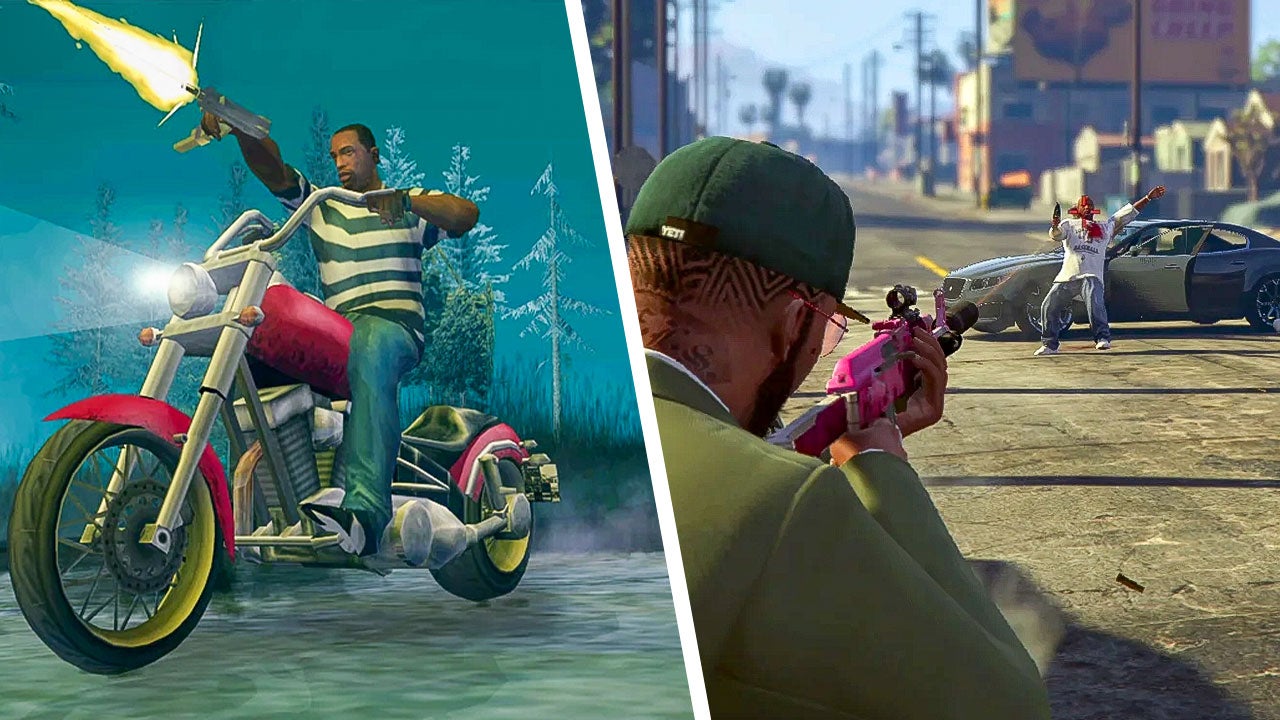
Since its revolutionary transformation with Grand Theft Auto 3 in 2001, the GTA franchise has delivered 346 story missions across five mainline games, each offering opportunities for blockbuster moments, unforgettable sandbox spectacles, and career-making virtual crimes. Developer Rockstar Games has crafted some of the most memorable gaming experiences in history, missions that propel players forward with goofy cutscenes and culminate in orchestras of explosions and raw emotion. While the series has had its share of frustrating moments—missed trains, nightmarish RC planes, and inexplicable yoga sessions—the highs far outweigh the lows. These carefully designed missions represent the pinnacle of open-world game design and storytelling.
The Revolutionary Beginnings: How GTA 3 Changed Everything
The first moments of Grand Theft Auto 3 remain among the most impactful in gaming history. In just five short minutes, players witness an opening credit roll accompanied by jazzy piano, a bank heist and betrayal, and an armored convoy attacked on a dark and stormy night in Liberty City. When protagonist Claude is inadvertently freed from his prison transport, fellow escapee 8-Ball delivers the inaugural GTA mission, “Give Me Liberty.” While incredibly simple—players merely drive to a safehouse, then to Luigi’s—its importance as an onboarding experience cannot be overstated. Unlike contemporaries such as Driver and Stuntman, infamous for brutal tutorials that frustrated players into quitting, GTA 3 immediately trusted players with its sandbox. The mission established a cinematic atmosphere with moody shots of the city, hazy headlights smearing through pouring rain, and flashes of lightning—a bold statement of the series’ evolution from top-down games where missions were conveyed through payphones with unvoiced text.
This foundational approach to mission design would influence every subsequent entry in the franchise. GTA: Vice City’s “Rub Out” exemplified the series’ progression mechanics, drawing heavy inspiration from Scarface as players stormed Ricardo Diaz’s mansion on Starfish Island. The resulting Vercetti Estate, complete with respawning armory, Infernus, helicopter, and loyal gang members, was the first property that made players truly feel like they’d made it in the criminal underworld. Meanwhile, GTA 4’s “Museum Piece” pushed narrative boundaries by featuring characters who would become protagonists in their own right—Johnny Klebitz from The Lost and the Damned and Luis Fernando Lopez from The Ballad of Gay Tony—establishing the multi-perspective storytelling that would become central to GTA 5’s DNA.
The Art of the Heist: From Caligula’s to Paleto Bay
Heists represent the essence of Grand Theft Auto: big brazen crimes, outrageous objectives, and open-ended improvisation when plans inevitably go wrong. “Breaking the Bank at Caligula’s” in San Andreas, released just three years after Ocean’s Eleven ushered in the modern era of heist films, set an unprecedented bar. The elaborate setup required CJ to date a casino employee for her keycard, steal police motorcycles and an armored car, photograph blueprints from a municipal building, and sabotage a dam to cut power. The heist itself featured croupier disguises, forklift door breaches, night vision navigation, and a parachute escape worthy of Tom Cruise—all within a heart-pounding seven-minute timer. GTA 4’s “Three Leaf Clover” took obvious cues from Michael Mann’s 1995 thriller Heat, featuring a brutal bank robbery that devolves into a mad dash through Algonquin’s streets and subway stations. The mission was so realistic that its inspiration, Heat’s downtown shootout, has been used by actual armed forces as an example of urban combat skills.
By GTA 5, heists had evolved into a central campaign pillar with six systematized robberies requiring careful planning phases. “The Paleto Score” stands as perhaps the ultimate power fantasy in the series. With no way around the alarm system and short police response times, players don heavy bomb squad armor and emerge through bank doors wielding miniguns. The mundane scenery of a sleepy mountain town transforms into an explosive battleground as players blast through country bumpkin cops, shoot down helicopters, and eventually escape via bulldozer through a chicken factory. It represents the perfect middle ground between San Andreas’s cartoon craziness and GTA 4’s grim verisimilitude—a brilliant example of the balancing act that defines modern Rockstar.
Genre-Bending Adventures and Character Moments
GTA: San Andreas showcased remarkable variety, with CJ’s journey encompassing go-kart racing, house robberies, farm equipment theft, remote-controlled toy warfare, and cross-country flights to Liberty City. “Black Project” stands as a particular highlight, incorporating Metal Gear-style tactical espionage as CJ infiltrates the fabled “Area 69” for conspiracy theorist The Truth—a hilarious throwback to when conspiracy theories belonged to harmless kooks rather than reality-destroying algorithms. Players could snipe guards, crawl through ventilation shafts, or disable facility defenses before claiming the prize: a $60 million jetpack. Carl Johnson soaring out of a secret military base with rockets strapped to his back represents the peak of the series’ glorious silliness. GTA 5’s “Minor Turbulence” finally delivered on the promise of vertical violence, with Trevor plowing a cropduster into a Merryweather cargo plane’s hold for a mid-air invasion accompanied by Tangerine Dream’s atmospheric score—a blockbuster sequence rivaling Uncharted’s cinematic setpieces.
Not every mission needs explosive spectacle, however. “Hood Safari” captures the essential “hangout” vibe, reuniting players with Grove Street decades after San Andreas while perfectly balancing characterization and absurdity. Trevor’s unsettling presence, Lamar’s career ambitions interrupted by fawning over MC Clip’s fashion shoot, and a Terminator 2-style canal chase create something genuinely memorable. GTA 4’s “A Dish Served Cold” offered the series’ most meaningful choice: take a deal with tormentor Dmitry Rascalov, or claim vengeance. Either path leads to tragedy—Roman’s assassination at his wedding or Kate McReary’s death in crossfire—rewarding players with a cheerful “You Won!” achievement amidst genuine anguish. It remains the most we’ve ever cared about GTA, an unexpected bittersweet resolution to the most human story the series has told.
The Ultimate Finale: Why “End of the Line” Reigns Supreme
GTA campaigns demand excellent finales to justify dozens of hours spent grinding up the criminal food chain. “End of the Line” achieves this better than any other mission in franchise history. San Andreas literally burns as the city erupts following Officer Tenpenny’s acquittal—the infamous “pedestrian riot” cheats canonized as angry NPCs attack each other and cars explode in the distance. This altered world state makes the finale feel truly climactic; there’s no going back, and whatever happens, CJ, Los Santos, and all of San Andreas will never be the same. CJ commandeers a SWAT tank to smash through Big Smoke’s fortress, battling through three floors of Ballas, Vagos, Rifa, and Russian mobsters before confronting his former friend, busy playing video games and hitting a bong. After Smoke falls, Tenpenny spoils the moment, forcing a chase through the burning building and across the city after the crooked cop’s fleeing fire truck.
Bombastic, brutal, and big in every sense, “End of the Line” delivers ultimate catharsis after 45 hours of grinding from Grove Street. Players share in CJ’s sense of accomplishment as Smoke and Tenpenny take their final breaths. As the group gathers to celebrate and CJ steps out into the hot Los Santos night alone, eager to “hit the block and see what’s happening,” the mission proves that endings can be beginnings. The story may conclude, but the world becomes an oyster for continued exploration. It remains one of the best final levels of all time and, by virtually any estimation, the greatest GTA mission ever crafted—a testament to Rockstar’s understanding that the journey matters as much as the destination, and that great game design means making players want to stay in your world long after the credits roll.
Expert Opinion: Rockstar Games has consistently demonstrated that mission design in open-world games requires a delicate balance between player freedom and carefully orchestrated spectacle. The evolution from GTA 3’s simple yet revolutionary “Give Me Liberty” to the multi-layered heists of GTA 5 reflects not just technological advancement, but a deepening understanding of player psychology and narrative pacing. As GTA 6 approaches, the studio faces the challenge of exceeding these legendary benchmarks while maintaining the series’ signature blend of chaos and compelling storytelling.