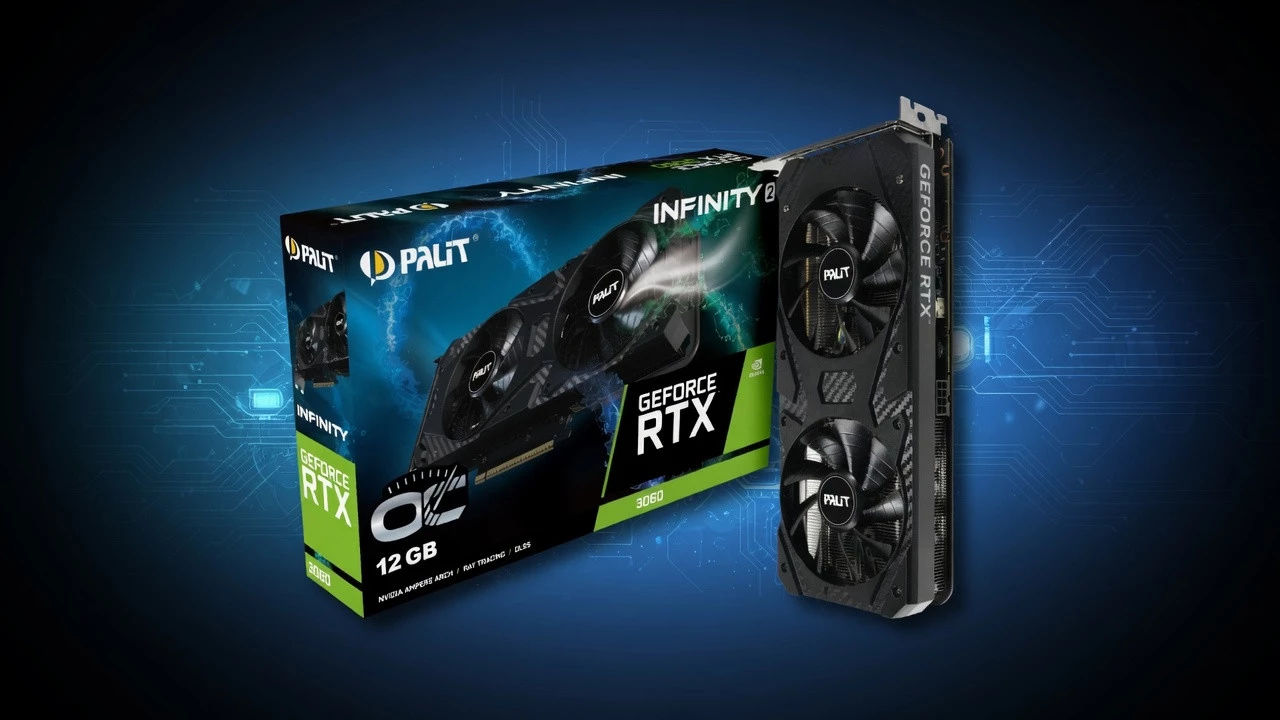
In an unexpected move that has captured the attention of the PC gaming community, Palit has officially announced the GeForce RTX 3060 Infinity 2 OC graphics card. This announcement marks the first concrete confirmation that graphics card manufacturers are actively participating in NVIDIA’s strategy to relaunch the RTX 3060, a GPU that originally debuted back in February 2021. The decision to revive a four-year-old graphics card architecture raises intriguing questions about the current state of the GPU market and the ongoing demand for mid-range gaming solutions.
The original RTX 3060 was built on NVIDIA’s Ampere architecture and quickly became one of the most popular graphics cards in its generation, offering solid 1080p gaming performance at a relatively accessible price point. With 12GB of GDDR6 memory and 3584 CUDA cores, the card struck a balance between performance and affordability that resonated with mainstream gamers. During the cryptocurrency mining boom and subsequent chip shortage of 2021-2022, the RTX 3060 became notoriously difficult to obtain, with prices often soaring to double or triple the suggested retail price.
Why Revive a Four-Year-Old GPU?
The decision to relaunch the RTX 3060 appears to be driven by several market factors. NVIDIA’s current generation RTX 40 series cards, while offering significant performance improvements, come with substantially higher price tags that have pushed many budget-conscious consumers out of the market. The RTX 4060, which serves as the direct successor to the RTX 3060, launched at $299 but has faced criticism for offering only marginal improvements in certain workloads. By bringing back the RTX 3060, manufacturers like Palit can address the substantial demand for affordable gaming GPUs that still exists in emerging markets and among first-time PC builders.
Industry analysts suggest that NVIDIA likely has remaining Ampere GPU dies that need to be utilized before they become obsolete. Rather than letting these chips go to waste, partnering with board manufacturers to create new products represents a practical business solution. This strategy also allows NVIDIA to maintain competitive pressure against AMD’s Radeon RX 7600 and upcoming budget offerings, ensuring presence across multiple price tiers in the graphics card market.
The Palit Infinity 2 OC: What We Know
The Palit GeForce RTX 3060 Infinity 2 OC follows the company’s established Infinity series design language, featuring a dual-fan cooling solution that has proven effective in previous iterations. The “OC” designation indicates this is a factory-overclocked variant, suggesting boost clock speeds slightly above NVIDIA’s reference specifications of 1777 MHz. Palit has historically delivered solid thermal performance and build quality with their Infinity line, making this revival particularly noteworthy for consumers seeking reliable mid-range options.
While Palit has not yet disclosed specific pricing or availability details, the card is expected to slot in below current RTX 40 series offerings. Market observers anticipate a suggested retail price somewhere between $200 and $250, which would make it an attractive option for gamers building systems on tight budgets or those looking to upgrade from significantly older hardware like GTX 10 series or GTX 16 series cards.
Market Implications and Consumer Considerations
The RTX 3060 revival represents a broader trend in the GPU industry where manufacturers are increasingly focused on addressing the mid-range and budget segments that have been underserved in recent years. With both NVIDIA and AMD concentrating their newest architectures on high-end products, many consumers have been left searching for reasonable upgrade paths. The return of proven performers like the RTX 3060 provides options for those who prioritize value over having the absolute latest technology.
However, potential buyers should approach this news with measured expectations. While the RTX 3060 remains capable for 1080p gaming and light content creation, it lacks newer features found in RTX 40 series cards, including DLSS 3 frame generation technology and improved ray tracing performance. Additionally, as a four-year-old architecture, its long-term driver support timeline may be more limited compared to current-generation products. For consumers weighing their options, the decision will ultimately come down to budget constraints versus feature requirements and expectations for how long they plan to use the card before upgrading again.
Expert Opinion: This GPU revival signals NVIDIA’s acknowledgment that the mid-range market remains significantly underserved by current-generation offerings. We can expect similar relaunches from other board partners in the coming months, potentially driving RTX 3060 prices down to the $180-200 range. This strategy may also indicate that NVIDIA is preparing the market for a more competitively priced RTX 50 series lineup, using legacy products to maintain market share in the interim.