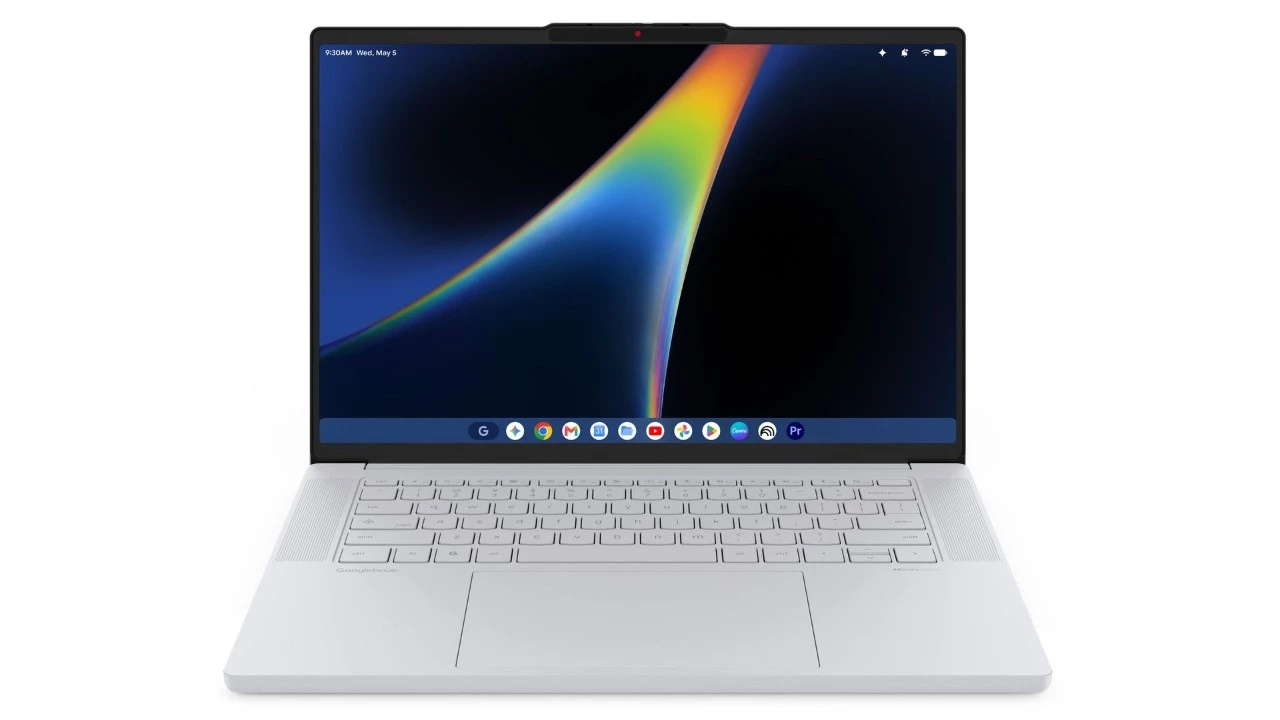
Lenovo is preparing to launch one of the first laptops in Google’s entirely new Googlebook category, signaling a dramatic shift in the tech giant’s approach to personal computing. The device, revealed through recently leaked images, suggests that Google is ready to abandon its decade-old ChromeOS platform in favor of a completely reimagined operating system built on Android foundations with deep artificial intelligence integration powered by Gemini. This strategic pivot represents one of the most significant changes in Google’s hardware ecosystem since the original Chromebook launch in 2011.
The End of an Era: ChromeOS Makes Way for Android-Based Computing
Google’s decision to transition away from ChromeOS marks a pivotal moment in the company’s computing strategy. ChromeOS was originally designed as a lightweight, web-centric operating system that prioritized security, simplicity, and cloud connectivity. The platform found significant success in educational markets, where schools appreciated its low maintenance requirements and affordable hardware options. According to industry estimates, Chromebooks captured approximately 60% of the K-12 education market in the United States at their peak. However, the platform struggled to gain meaningful traction among enterprise users and consumers who required more robust application support and offline capabilities.
The new Googlebook platform addresses these limitations by leveraging Android’s mature app ecosystem while introducing enhanced productivity features. This approach allows Google to offer users access to millions of applications from the Play Store while maintaining the security and update simplicity that made ChromeOS attractive. Industry analysts have noted that this transition has been years in the making, with Google gradually bringing Android applications to ChromeOS devices before ultimately deciding to rebuild the entire platform from the ground up.
Gemini Integration: AI at the Core of the User Experience
Perhaps the most significant aspect of the Googlebook platform is its deep integration with Gemini, Google’s most advanced artificial intelligence system. Unlike traditional operating systems where AI features are bolted on as separate applications or assistants, Googlebook positions Gemini as a fundamental component of the user experience. This integration enables contextual assistance across all applications, intelligent document processing, real-time translation, and sophisticated voice interaction capabilities that far exceed what was possible on ChromeOS devices.
The timing of this launch coincides with an industry-wide push toward AI-enhanced computing experiences. Microsoft has been aggressively promoting its Copilot+ PC initiative, while Apple has integrated Apple Intelligence features across its latest Mac lineup. Google’s response through the Googlebook platform represents its attempt to establish leadership in this emerging category. The company’s advantage lies in its extensive AI research capabilities and its control over both the hardware specifications and software platform, allowing for optimization that third-party AI solutions cannot match.
Lenovo’s Googlebook 15: Hardware Specifications and Market Positioning
The Lenovo Googlebook 15 appears to be positioned as a mid-range to premium device based on the initial images and leaked specifications. Lenovo’s involvement as one of the launch partners is strategically significant, given the company’s position as the world’s largest PC manufacturer and its extensive experience producing Chromebook devices for both consumer and enterprise markets. The 15-inch form factor suggests the device is targeting productivity users who require ample screen real estate for work applications.
Industry experts anticipate that Googlebook devices will compete directly with traditional Windows laptops rather than occupying the budget-focused niche where Chromebooks often resided. This positioning would allow Google to capture higher margins while demonstrating the platform’s capabilities to potential enterprise customers. The success of this strategy will depend largely on how well Android-based productivity applications perform compared to their Windows counterparts and whether Google can convince businesses to invest in its new ecosystem.
Looking Ahead: Implications for the Computing Industry
The introduction of Googlebooks represents more than just a rebranding exercise; it signals Google’s renewed commitment to personal computing hardware and software. The company’s previous attempts to challenge Windows dominance have yielded mixed results, but the combination of AI capabilities and Android’s established application ecosystem presents a more compelling value proposition than ChromeOS ever offered. As additional manufacturers announce their Googlebook devices in the coming months, the true scope of Google’s ambitions will become clearer.
Expert Opinion: Google’s pivot from ChromeOS to an Android-based Googlebook platform represents a calculated bet that AI integration will be the primary differentiator in personal computing going forward. If successful, this strategy could fundamentally reshape the laptop market by establishing a viable third ecosystem alongside Windows and macOS. However, enterprise adoption will ultimately determine whether Googlebooks become mainstream productivity tools or remain niche alternatives in specific market segments.