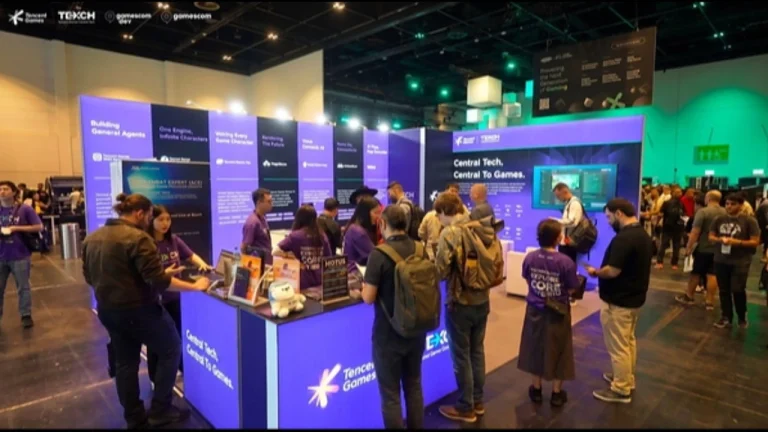
Information about NVIDIA’s upcoming GeForce 615.xx driver package has leaked online, confirming the imminent release of the updated DLSS 4.5 Ray Reconstruction technology. According to the leaked documentation, the graphics giant is planning to officially unveil this significant update at Gamescom 2025, one of the world’s largest gaming conventions held annually in Cologne, Germany. This development marks another major step forward in NVIDIA’s ongoing efforts to revolutionize real-time graphics rendering through artificial intelligence.
Understanding DLSS and Ray Reconstruction Technology
Deep Learning Super Sampling, or DLSS, represents one of NVIDIA’s most groundbreaking innovations in gaming technology. First introduced in 2018 alongside the RTX 20-series graphics cards, DLSS uses machine learning algorithms trained on NVIDIA’s supercomputers to upscale lower-resolution images in real-time, delivering higher frame rates without sacrificing visual quality. The technology has evolved significantly over the years, with DLSS 2.0 bringing dramatic improvements in 2020, followed by DLSS 3.0’s revolutionary Frame Generation feature in 2022.
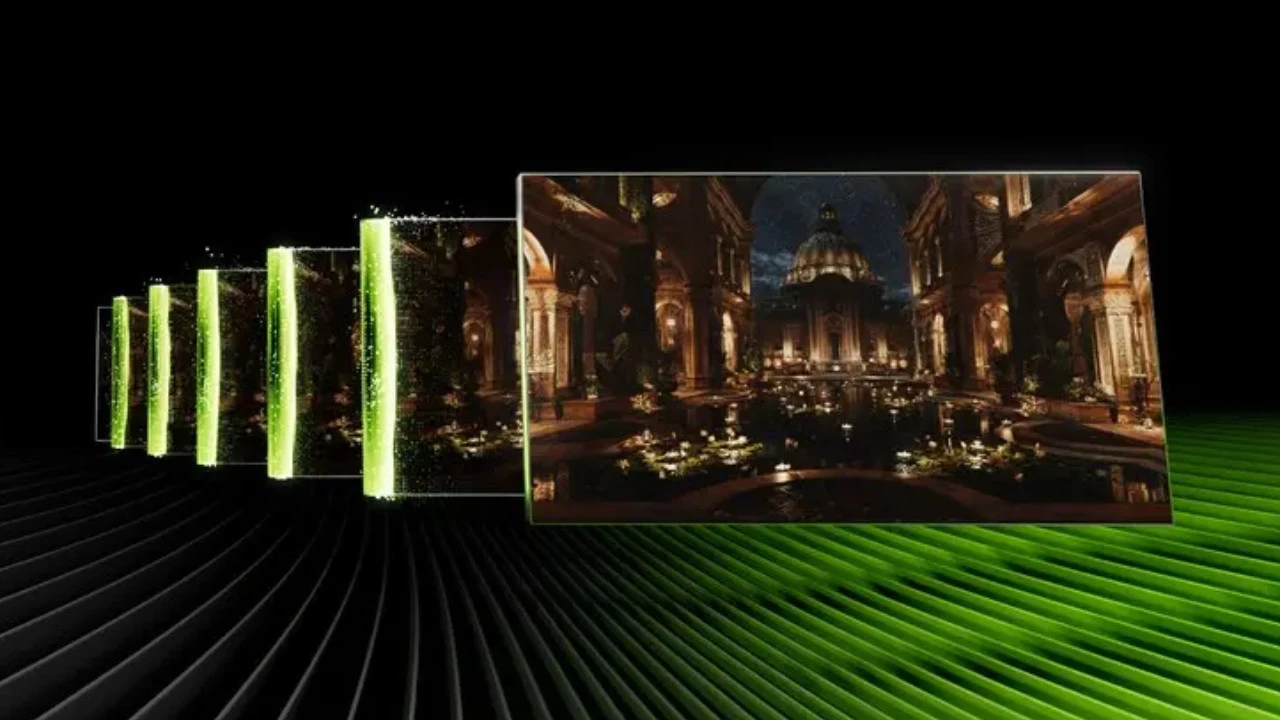
Ray Reconstruction, which debuted as part of DLSS 3.5 in September 2023, specifically addresses the visual artifacts and noise that can appear in ray-traced scenes. Traditional denoising techniques often struggle to maintain temporal stability, leading to flickering, ghosting, and other visual anomalies. Ray Reconstruction replaces these conventional methods with an AI-powered approach that reconstructs ray-traced lighting with superior accuracy, producing cleaner shadows, more realistic reflections, and improved global illumination while maintaining smooth motion during gameplay.
What DLSS 4.5 Brings to the Table
The upcoming DLSS 4.5 update is expected to deliver substantial improvements to the Ray Reconstruction pipeline. Industry analysts anticipate enhanced temporal stability, reduced artifacts in complex lighting scenarios, and better performance optimization across a wider range of hardware configurations. The 615.xx driver branch suggests this will be a major release, potentially coinciding with new game launches or hardware announcements at Gamescom. NVIDIA has historically used the German trade show as a platform for significant product reveals, making it an ideal venue for showcasing advancements in their AI-driven graphics technologies.
The leaked information indicates that NVIDIA has been working extensively to address community feedback regarding Ray Reconstruction’s performance in certain edge cases. Early implementations sometimes struggled with fast-moving objects or scenes with extreme contrast, issues that DLSS 4.5 reportedly aims to resolve. Additionally, the update may include expanded compatibility with more game titles, as developers continue to integrate DLSS support into their engines.
The Competitive Landscape and Industry Impact
NVIDIA’s continued investment in AI-enhanced graphics technology comes amid intensifying competition from AMD’s FSR (FidelityFX Super Resolution) and Intel’s XeSS technologies. While AMD has made significant strides with FSR 3.0 and its frame generation capabilities, NVIDIA maintains a technological lead in AI-driven image reconstruction, largely due to the dedicated Tensor cores found in RTX graphics cards. The DLSS 4.5 update reinforces NVIDIA’s commitment to maintaining this advantage and delivering cutting-edge visual experiences to gamers and content creators alike.
For gamers, the practical implications are substantial. Ray tracing, while visually stunning, has traditionally imposed a severe performance penalty. Technologies like Ray Reconstruction make high-fidelity ray tracing more accessible, allowing players with mid-range hardware to enjoy visual features previously reserved for top-tier systems. As NVIDIA continues refining these AI tools, the gap between cinematic-quality rendering and real-time gameplay continues to narrow, fundamentally changing expectations for visual fidelity in interactive entertainment.
Expert Opinion: The timing of this DLSS 4.5 release at Gamescom suggests NVIDIA is positioning this update as a major milestone rather than an incremental improvement. With the RTX 50-series presumably on the horizon, perfecting Ray Reconstruction technology now could prove crucial for next-generation hardware adoption. Industry observers should expect NVIDIA to leverage these AI advancements as a key differentiator against increasingly capable competition from AMD and Intel in the AI-accelerated graphics space.