
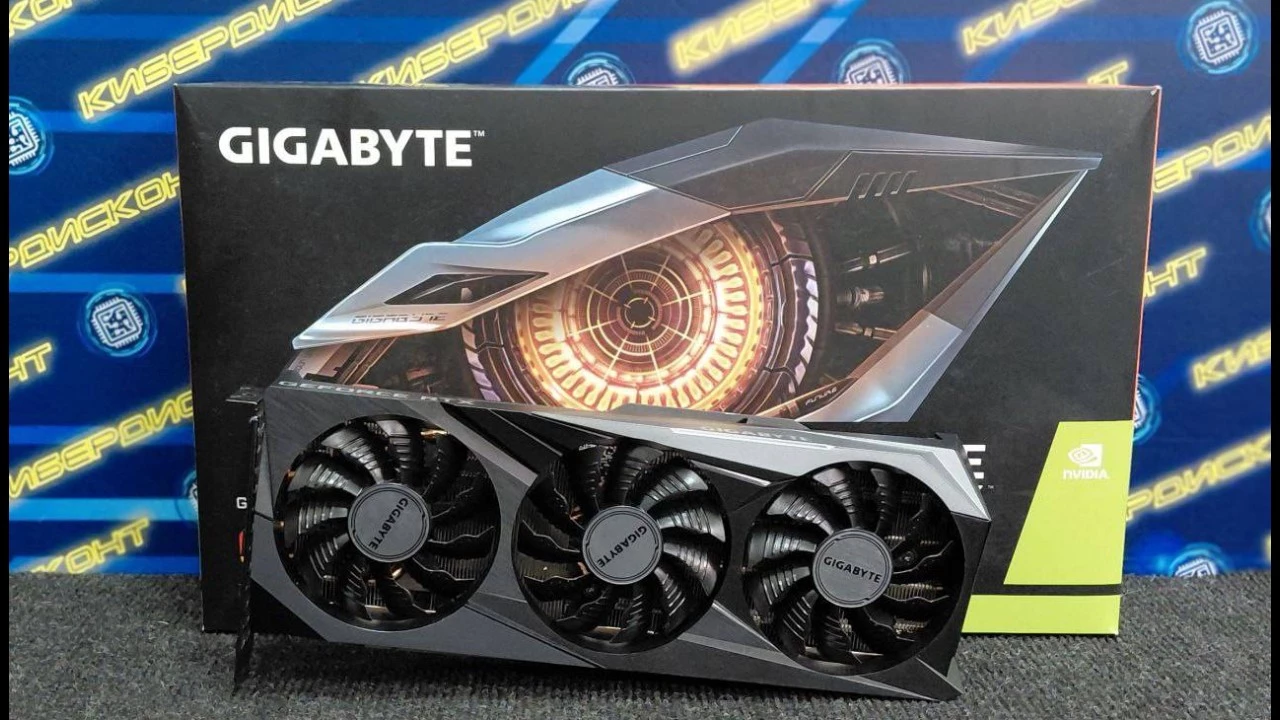
In a cautionary tale for both manufacturers and consumers alike, a graphics card owner recently discovered that their NVIDIA GeForce RTX 3070 had been operating for nearly five years with a factory protective film still attached to the thermal interface. The oversight, attributed to GIGABYTE’s manufacturing process, resulted in significant thermal degradation that only came to light when the user finally decided to disassemble the card for maintenance. By then, the damage had already taken its toll on the hardware’s performance and longevity.
The discovery was made when the owner noticed increasingly concerning temperature readings during normal operation. After years of use, the card had begun exhibiting thermal throttling behavior that prompted an investigation. Upon opening the graphics card, the user found a thin protective plastic film — typically applied during manufacturing to protect thermal pads and paste from contamination — had never been removed before the unit left the factory floor. This thin barrier had been preventing proper heat transfer between the GPU die and the heatsink for the entire operational life of the card.
The Critical Role of Thermal Management in Modern GPUs
Modern graphics cards like the RTX 3070 generate substantial amounts of heat during operation, with the GPU die itself capable of producing thermal loads exceeding 220 watts under full load conditions. Proper thermal interface materials — whether thermal paste, thermal pads, or graphite sheets — are essential for conducting this heat away from the sensitive silicon to the heatsink and ultimately out of the system through fans or other cooling solutions. Even a thin plastic film, measuring just fractions of a millimeter in thickness, can dramatically reduce thermal conductivity and cause temperatures to spike by 20-30 degrees Celsius or more.
The RTX 3070, released by NVIDIA in October 2020, was designed with a 220W thermal design power and featured the GA104 GPU architecture. Under normal circumstances with proper thermal interface application, the card maintains operating temperatures in the 65-75°C range under load. However, with compromised thermal transfer, cards can easily exceed safe operating thresholds of 83°C, triggering automatic thermal throttling that reduces clock speeds and performance to prevent permanent damage to the silicon.
Manufacturing Quality Control Under Scrutiny
This incident raises serious questions about quality control procedures at major graphics card manufacturers. GIGABYTE, a Taiwanese electronics company founded in 1986, is one of the largest producers of computer hardware in the world and partners with NVIDIA to produce custom versions of their graphics cards. The company’s manufacturing facilities typically employ multiple inspection checkpoints before products leave for distribution. However, as this case demonstrates, even established manufacturers can experience lapses in quality assurance that slip through to consumers.
Industry analysts note that similar incidents have occurred across various manufacturers over the years, though they remain relatively rare given the millions of graphics cards produced annually. The protective films are applied during the manufacturing process to prevent contamination of thermal materials during assembly and shipping. Workers or automated systems are supposed to remove these films as one of the final steps before the cooling solution is mounted. When this step is missed, the consequences may not become apparent for months or even years, as the card may still function — albeit at reduced efficiency and elevated temperatures.
Long-Term Implications and Consumer Protection
The nearly five-year delay in discovering this manufacturing defect highlights a significant challenge for consumers seeking warranty protection or compensation. Most graphics card warranties, including GIGABYTE’s standard coverage, extend only three years from the date of purchase. By the time thermal degradation becomes severe enough to prompt investigation, the warranty period may have already expired, leaving consumers with limited options for recourse. Additionally, opening the card for inspection — as this user did — typically voids any remaining warranty coverage.
Experts recommend that consumers experiencing unexpectedly high temperatures on relatively new graphics cards consider professional inspection or contact manufacturer support before the warranty period expires. Monitoring software such as MSI Afterburner, HWiNFO, or GPU-Z can help users track temperature trends over time and identify anomalies early. For those comfortable with hardware maintenance, periodic visual inspection of thermal interfaces during routine cleaning can catch manufacturing defects before they cause permanent damage to expensive components.
Expert Opinion: This incident underscores a broader industry challenge where cost-cutting pressures and high-volume production can compromise quality control at critical stages. As graphics cards continue to increase in both price and thermal output — with flagship models now exceeding $1,500 and 400W TDP — manufacturers must invest more heavily in automated inspection systems and worker training to prevent such oversights. Consumers should document temperature readings from the first day of ownership and advocate for extended warranty periods that match the expected lifespan of premium hardware.