The Racing Line Explained: Braking Points, Apexes and Corner Exits in Racing Games
Learn the racing line in games: outside-inside-outside, late vs early apex, braking markers, trail braking and how to wean yourself off on-screen line assists.
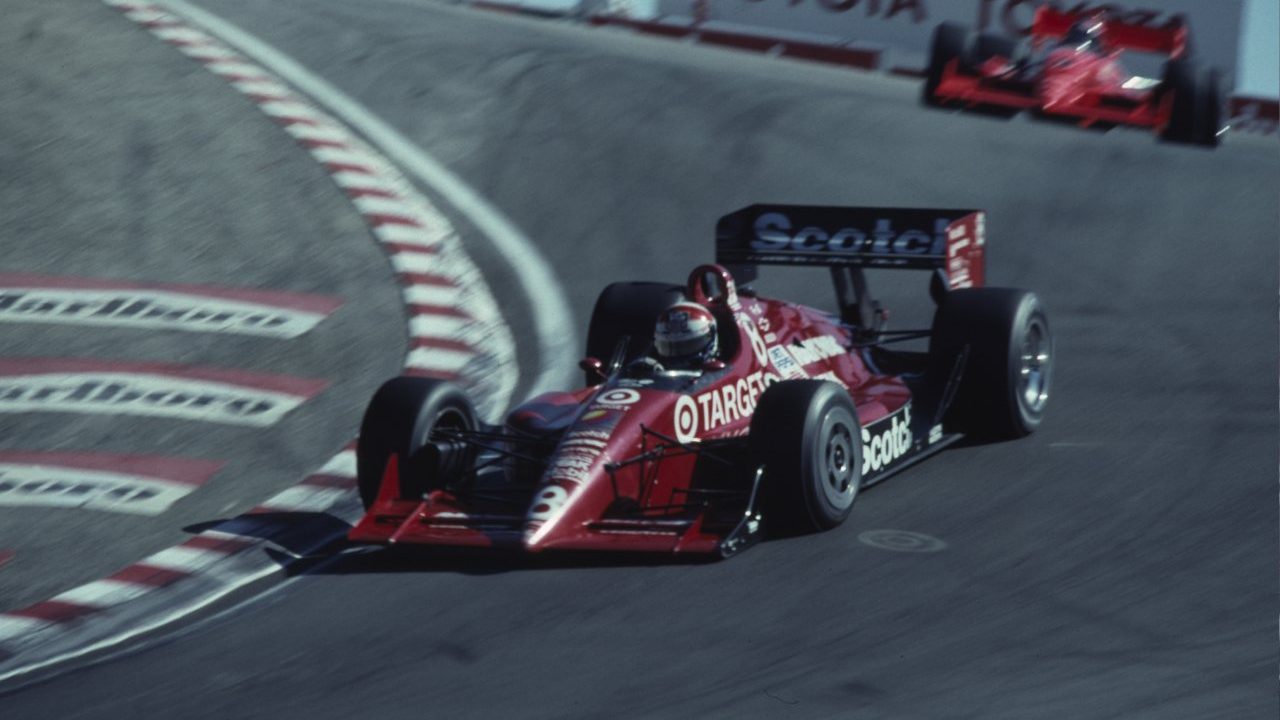
Ask any fast player in a racing game what made the biggest difference to their lap times, and the answer is rarely a car or a setup. It is the line: the path they take through each corner, where they brake, and how early they get back on the throttle. The racing line is the single most important skill in circuit racing games, from Gran Turismo and Forza to the official F1 games, and it applies in some form even to arcade racers.
This guide explains the core ideas in practical, game-focused terms, then shows how to use the on-screen line assists in popular games as training wheels rather than a crutch. If you are still deciding which kind of racing game suits you, our guide to sim vs. arcade racing games is a good starting point.
What the Racing Line Is
The racing line is the fastest path around a circuit. In most corners, that means using the full width of the track to make the turn as gentle as possible. A wider, more open arc lets the car carry more speed than a tight one, because a car can corner faster on a larger radius with the same grip.
The classic pattern is outside-inside-outside:
- Turn-in: approach on the outside edge of the track.
- Apex: clip the inside of the corner at its clipping point.
- Exit: let the car run out to the outside edge as you accelerate away.
If you watch replays of fast drivers, or look at the rubber marks on a real track, you will see this pattern repeated corner after corner.
Apexes: Geometric, Late and Early
The apex is the point where your car comes closest to the inside of the corner. Where you place it changes everything that follows.
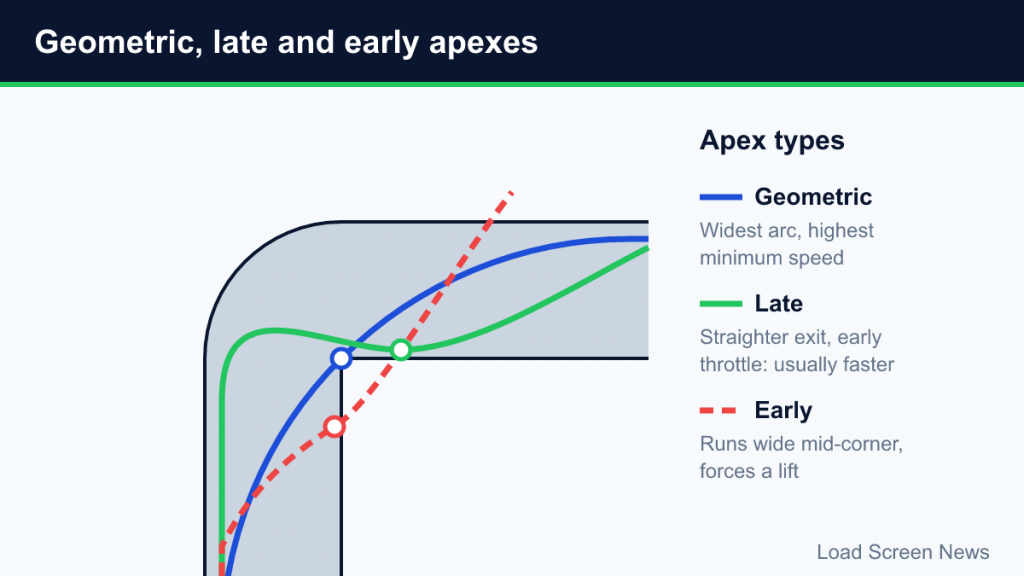
Geometric apex
The geometric apex sits at the middle of the corner and produces the widest, constant-radius arc. It gives the highest possible minimum speed through the turn itself.
Late apex
A late apex delays the turn-in and clips the inside further around the corner. Entry speed is lower, but the exit is straighter, which lets you get on the throttle earlier and harder. For most corners, especially those leading onto straights, a late apex is faster overall, because the speed you carry onto the straight is maintained all the way down it.
Early apex
An early apex means turning in too soon. It feels fast on entry, but it leaves the car pointing at the outside of the track mid-corner, forcing you to lift or brake to avoid running wide. Early apexing is one of the most common beginner mistakes in racing games.
A useful rule of thumb from racing instruction: the faster the corner, the closer to the geometric line you should drive; the slower the corner, and the more important the straight after it, the later the apex.
Prioritize the Exit Before Long Straights
Not all corners are equally important. The corner before a long straight matters most, because exit speed carries through the entire straight. Losing a little time on entry to gain exit speed pays back many times over.
In sequences of corners, such as chicanes or esses, the same logic applies. You may need to compromise the line in the first corner to set up the last one correctly. The goal is to exit the final corner of the sequence onto the next straight at maximum speed, even if the earlier corners feel slower.
A good habit is to ask, for every corner: “What comes next?” If a straight follows, prioritize exit. If another corner follows immediately, prioritize positioning for that corner.
Braking Points and Markers
Consistency in racing games starts with braking in the same place every lap. That requires reference points:
- Distance boards on many circuits, often marking 100-meter intervals before a corner.
- Track features such as a change in the curb pattern, a bridge, a sign, a shadow or the start of a barrier.
- In-game markers such as cones or the braking section of an on-screen line.
Choose one marker per corner and brake there every lap. If you are consistently too slow, move your braking point slightly later. If you are running wide, move it earlier. Changing one thing at a time is the only way to learn what works.
Brake in a straight line first
The basic technique is to do most of your braking while the car is still traveling straight, when the tires can devote all their grip to slowing down. Then release the brake as you turn in. Braking hard while turning sharply asks the tires to do two jobs at once and often leads to understeer or a spin.
Trail Braking Basics
Once straight-line braking feels comfortable, the next step is trail braking: keeping some brake pressure applied past the turn-in point and easing off gradually as you approach the apex.
Why does it work? Braking shifts weight onto the front tires, which increases their grip. Keeping a little of that weight on the front as you turn in helps the car rotate toward the apex and reduces understeer. Releasing the brake abruptly at turn-in can leave a moment where the tires are not using their full grip.
The risks are real, though. Too much brake while turning overloads the front tires, causing understeer, and in some cars the lightened rear can step out and cause oversteer. Trail braking takes finesse and practice. On a controller, it helps to use a smooth, progressive release of the trigger rather than lifting off all at once.
How On-Screen Racing Lines Work in Games
Most modern racing games can draw the line on the track for you. The line usually changes color to indicate when to accelerate, lift and brake, typically green for acceleration and red for braking.
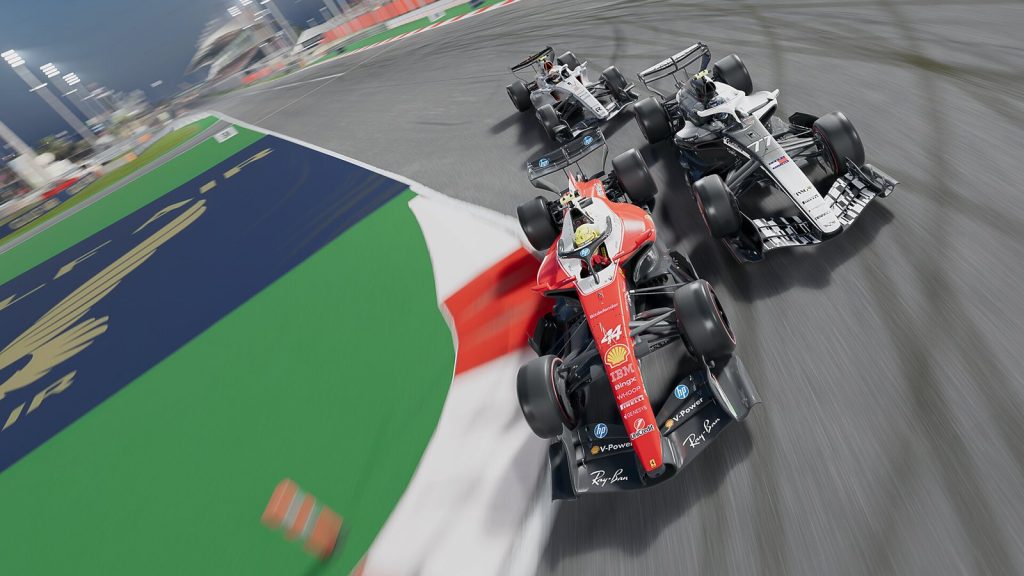
Official F1 games
Codemasters’ F1 games call this the Dynamic Racing Line. In the series’ assist menu it can be set to Off, Corners Only or Full, and it is color-coded to show where to accelerate and brake. “Corners Only” is a useful middle step because it removes the guidance on straights while keeping it where you need it most.
Gran Turismo 7
GT7’s assist menu includes Driving Line Assistance, which projects a guide line along the track surface, along with a braking indicator and braking area markers. Assist presets bundle these settings, and switching to a custom preset lets you change each one individually.
Forza
Forza games offer a driving line as an assist, with a full line or a “Braking Only” option that shows just the braking zones. Many guides for Forza Horizon 6 recommend the Braking Only setting as a balanced choice for road racing.
How to Wean Yourself Off the Line
The on-screen line is an excellent teacher but a poor permanent companion. It reflects a generic line rather than the optimal one for your car, and relying on it stops you from learning to read the track. Here is a progression many players use:
- Full line: use it on a new track to learn the layout and approximate braking zones.
- Braking-only or corners-only: remove the guidance on straights and in simple corners. Start noticing your own reference points.
- Line off on a familiar track: choose one circuit you know well and drive it without any line. Pick your own braking markers.
- Line off everywhere: use the line only for your first few laps on a new circuit, then switch it off.
Time trials and practice sessions are ideal for this process. Ghost cars, which many games offer, let you compare your line directly against your best lap or a faster driver.
Common Racing Line Mistakes
- Turning in too early. The most common error. Wait a beat longer than feels natural.
- Not using the full track width. Hugging the middle of the road wastes radius and speed.
- Braking too late, then crawling through the corner. Late braking feels heroic but often ruins the exit. Slow in, fast out is usually faster.
- Applying full throttle too early on exit. Especially in powerful rear-wheel-drive cars, this causes wheelspin. Squeeze the throttle progressively as you unwind the steering.
- Changing everything at once. Adjust one corner and one variable at a time.
Adapting the Line to Your Car
There is no single racing line for every car. A heavy, powerful car with limited grip usually benefits from a later apex and a straighter exit, because it needs time to put its power down. A light, low-powered car loses speed it can never regain, so it rewards carrying momentum through wider, smoother arcs. Cars with lots of aerodynamic downforce grip harder at high speed, which changes where you can brake and how fast you can take quick corners. When you switch cars, expect to adjust your braking markers and apexes rather than reusing old ones.
Practice Drills That Work
- The one-corner drill: pick a single corner and run laps focusing only on it. Try different braking points and apexes and compare times through sector splits.
- The slow-car drill: drive a low-powered car. Slow cars punish poor lines more clearly because you cannot make up lost speed with power.
- The no-brake drill: on a track with fast corners, try a lap using only lifting off the throttle. It teaches smooth inputs and line choice.
- The replay check: watch your replay from an overhead or chase camera to see where you actually placed the car.
The racing line is a skill you will keep refining for as long as you play. The good news is that it transfers: once you understand apexes, braking markers and exits, you can take those habits to any circuit, any car and almost any racing game.